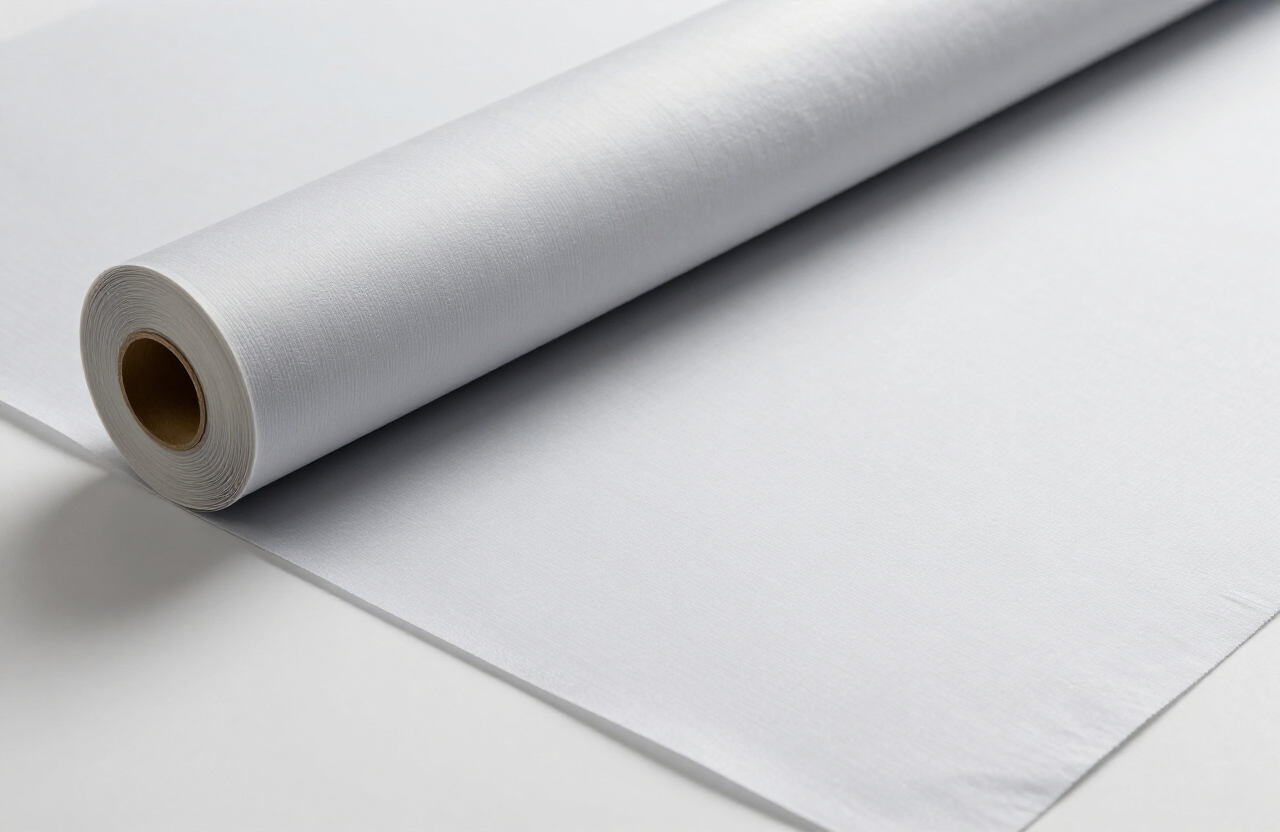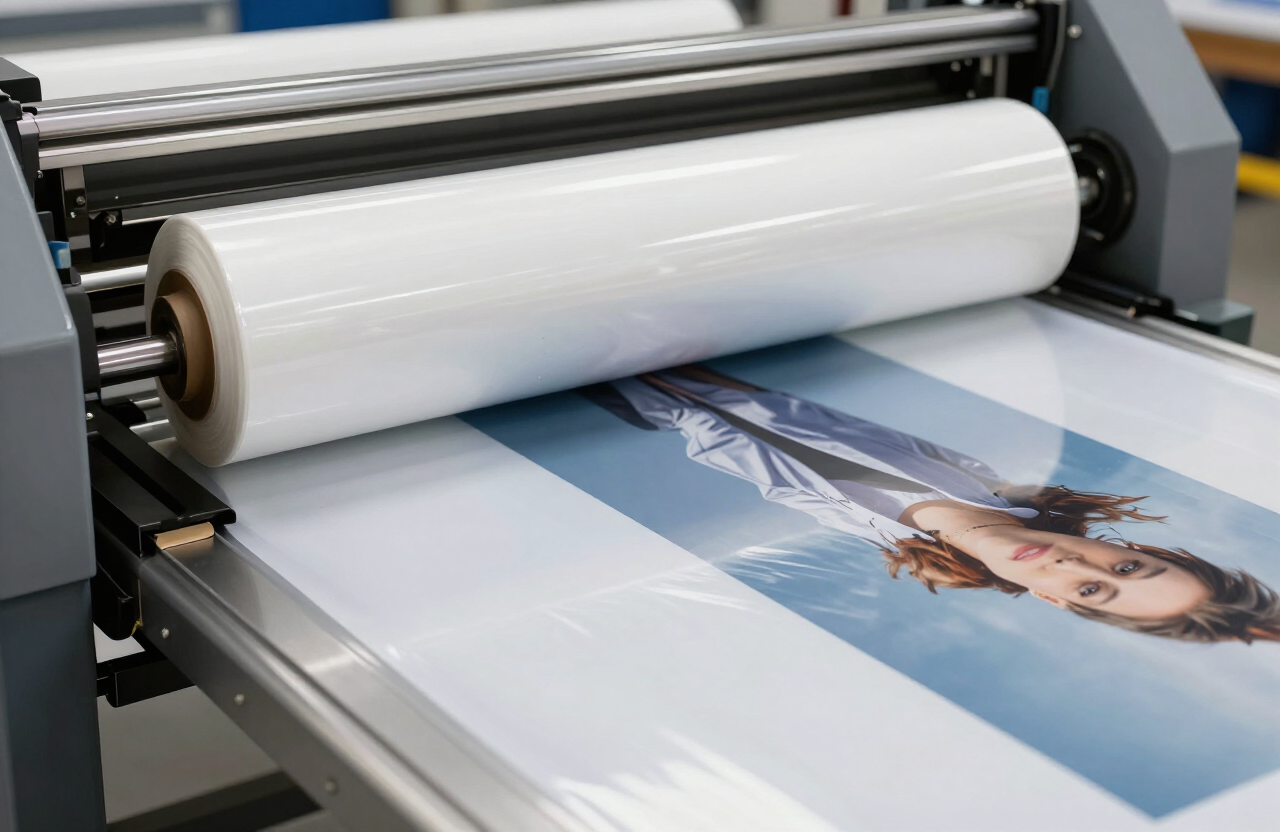
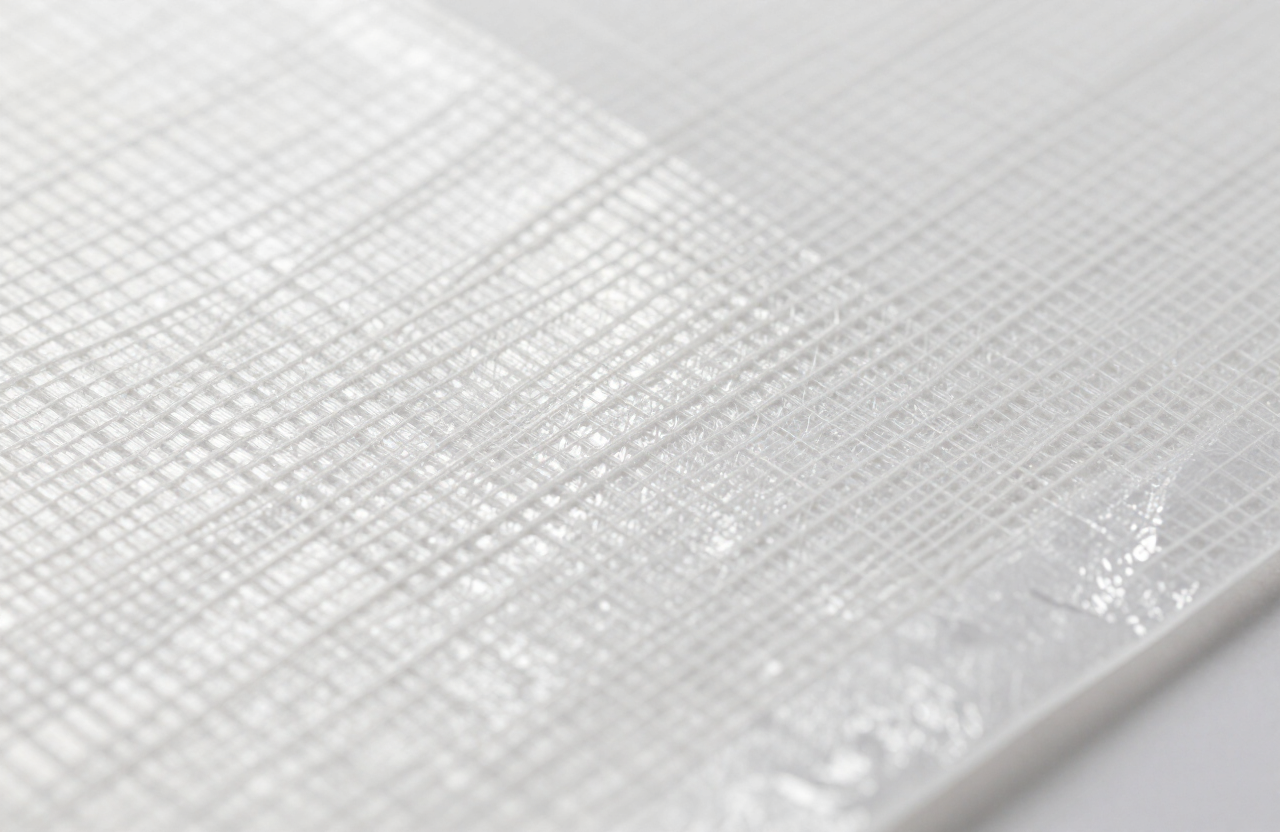
PVC flex banner is a biaxial-stretching calender film laminated to a warp-knitted polyester scrim. Here is the full production path — from resin blending to the inspection table — and where defects are born.
Two materials, one composite
A finished PVC flex banner is a three-layer composite: a top PVC calender film, a warp-knitted bi-axial polyester scrim, and a bottom PVC calender film. The film carries the printable surface and weathering; the scrim carries the tensile strength. NCF produces both on-site — the film on 4-roll calender machines and the scrim on Raschel and Tricot warp-knitters — before bonding them on hot- or cold-lamination lines.
PVC calender film: resin to roll
Polyvinyl chloride resin is blended with plasticizers, thermal stabilizers, lubricants, titanium dioxide and calcium carbonate filler to a custom formula. The compound is high-speed mixed at elevated temperature, then kneaded and plasticated through an internal mixer and open mill. From there it feeds onto the calender rolls, which plasticate and roll it into an even-thickness biaxial-stretching film. The finished film runs through stripping, embossing, cooling, thickness gauging and final winding. Banner-film softness is set by oil content — typically 30–34 PHR, adjusted seasonally for the destination climate.
The scrim that sets tear strength
The base fabric is a warp-knitted bi-axial scrim of low-shrinkage, high-tenacity polyester filament (FDY). Yarn denier and weave density together set weight and strength: a 200×300D 18×12 scrim weighs 39 gsm, a 500×500D 9×9 weighs 45 gsm, and a 1000×1000D 18×12 weighs 118 gsm. Weft density is freely adjustable and strongly influences cost; warp density is fixed by machine needle count (9, 12 or 18 needles per inch). Binding stitch matters too — Z-stitch gives a thicker fabric ideal for cold lamination, while X-stitch runs 0.02–0.03 mm thinner and yields the smooth glossy surface preferred for hot lamination.
Lamination: hot vs cold
Mirror-finished heating rollers bond the films to the scrim without liquid adhesive. Cold lamination runs at roughly 150 °C via thermal-oil heating and needs about 0.80 m of extra input width; it is economical with good tear resistance. Hot lamination runs at 180–190 °C, needs only 0.12 m of extra input width, and delivers superior single- or double-side flatness — the choice for South and North American markets, at roughly +0.2 USD per square metre. Line speed ranges from 5 to 35 m/min on a 3-phase 380 V / 50 Hz supply.
Where defects are born — and caught
The classic calender-film defects are excessive shrinkage, uneven thickness (edges cool faster and run thicker), pinholes from unmelted feedstock or over-loaded filler, and plasticizer blooming as lubricants and stabilizers migrate to the surface. Tear resistance drops sharply once calcium carbonate loading reaches 50–60 phr. NCF catches the optical defects on the 100% light-transmission inspection table and the print-side defects with per-batch ink-absorption drawdown testing — so a defect born on the calender never reaches the roll that ships.
Talk to a sales engineer
Request specifications and pricing for this media.
Tell us the application, target weight, width and destination port — we reply within 24 hours on business days.
Request a QuoteNCF Production Engineering
Hangzhou Nuclear Coating Fabric Co., Ltd.